Hi, I am Shiba dog! Welcome to shiba-memo.com. I am so happy you are planning a trip to Japan!
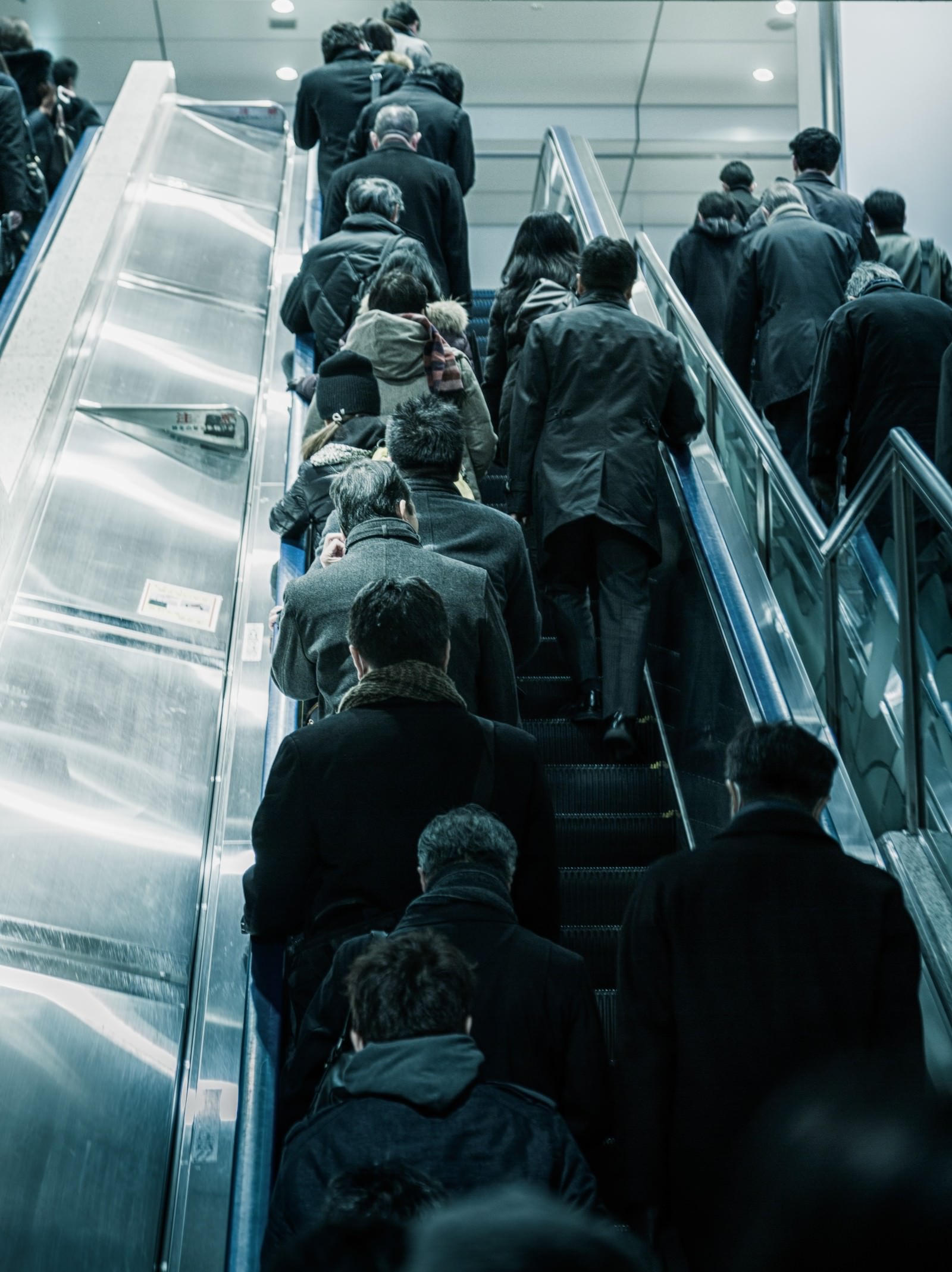
One thing that often confuses visitors as soon as they step into our train stations is the escalator etiquette. You might be standing there, wondering, “Should I stand on the left? Or the right?“ It feels like an unwritten rule that everyone else seems to know but you. Don’t worry! You are not alone in this, and honestly, even for us locals, things are changing.
Table of Contents
1. The Regional Divide: East vs. West
Japan has a funny way of doing things differently depending on where you are. When it comes to escalators, the “customary“ side to stand on depends on the city.
| Region | Standing Side | Note |
|---|---|---|
| Kanto (Tokyo) | Left | The right side is for walking. |
| Kansai (Osaka) | Right | The left side is for walking. |
| Nagoya | Both sides | Walking is strongly discouraged. |
1.1 Why the difference?
There are many urban legends about why Osaka stands on the right—some say it’s because businessmen in the Edo period wanted their swords on the outside, or because of a big exposition held years ago. Whatever the reason, it is just a local habit.
2. The Current Transition: Why Official Rules are Changing
Recently, you will see posters in every station that say, “Please do not walk on the escalator.“ Why? It comes down to three main reasons:
■ Safety First: Walking on moving stairs is dangerous. It leads to falls and accidental collisions with others.
■ Inclusivity: Everyone uses escalators, including people who have difficulty balancing or those who need to hold the handrail on either side. When one side is blocked, it makes life harder for many people.
■ Efficiency: Studies have shown that if everyone stands on both sides, the throughput of people is actually higher, moving the crowd out of the station faster.
3. Shiba’s Reality Check: How to Navigate Like a Local
I know it feels intimidating to be the only one standing on the “wrong“ side. My advice? Don’t overthink it! If you see a long line forming on one side, just stand behind the person in front of you. You are a tourist, and no one expects you to memorize the local customs of every prefecture.
4. Final Thoughts
Japan is currently in a transitional phase. We are moving toward a culture where safety takes priority over speed. If you accidentally stand on the “wrong“ side, don’t sweat it—people are generally very forgiving to travelers. Just keep your eyes open, stay safe, and enjoy your amazing journey through Japan!